| nom | Prince_Impérial |
|---|
| affichage de la vignette | sideThumb |
|---|
| titre (fr) | Prince Impérial |
|---|
| titre (en) | Prince Impérial |
|---|
| contenu de la page de présentation en markdown (fr) | #La correspondance générale du Prince Impérial
##Fiche signalétique de la collection
| Intitulé | Correspondance générale du Prince Impérial |
|----------|-------------------------------------------------|
| Date | 1860-1879 |
| Producteur | Napoléon, Eugène, Louis, Jean, Joseph Bonaparte, Prince Impérial |
| Importance matérielle | 153 lettres|
| Aperçu du contenu | Cette correspondance met en lumière la vie du Prince Impérial (1856-1879), fils unique de Napoléon III et d’Eugénie, disparu précocement à l’âge de 23 ans au cours d’une reconnaissance militaire, en territoire zoulou (Afrique australe), le 1<sup>er</sup> juin 1879. De sa prime enfance, sous les ors des palais impériaux, à l’exil, la personnalité du Prince Impérial s’affirme, déterminée et consciente de la haute mission que son nom lui impose. |
[Voir les documents](https://www.napoleonica.org/fr/collections/Prince_Imp%C3%A9rial/search?page=0&pageSize=20)
<br>
<br>
<i>« Je ne sais si, plus tard, cette correspondance sera publiée intégralement : ce jour-là, le Prince prendrait définitivement sa place parmi les figures les plus intéressantes et les intelligences les mieux douées du siècle où il a vécu »</i>
(Augustin Filon, <i> Le Prince Impérial</i>, souvenirs et documents, 1912, éd. Hachette ; p. 148).
##Sources de la correspondance générale
<div class="text-small-image">
<div class="side-text">
<br>
<br>
<br>
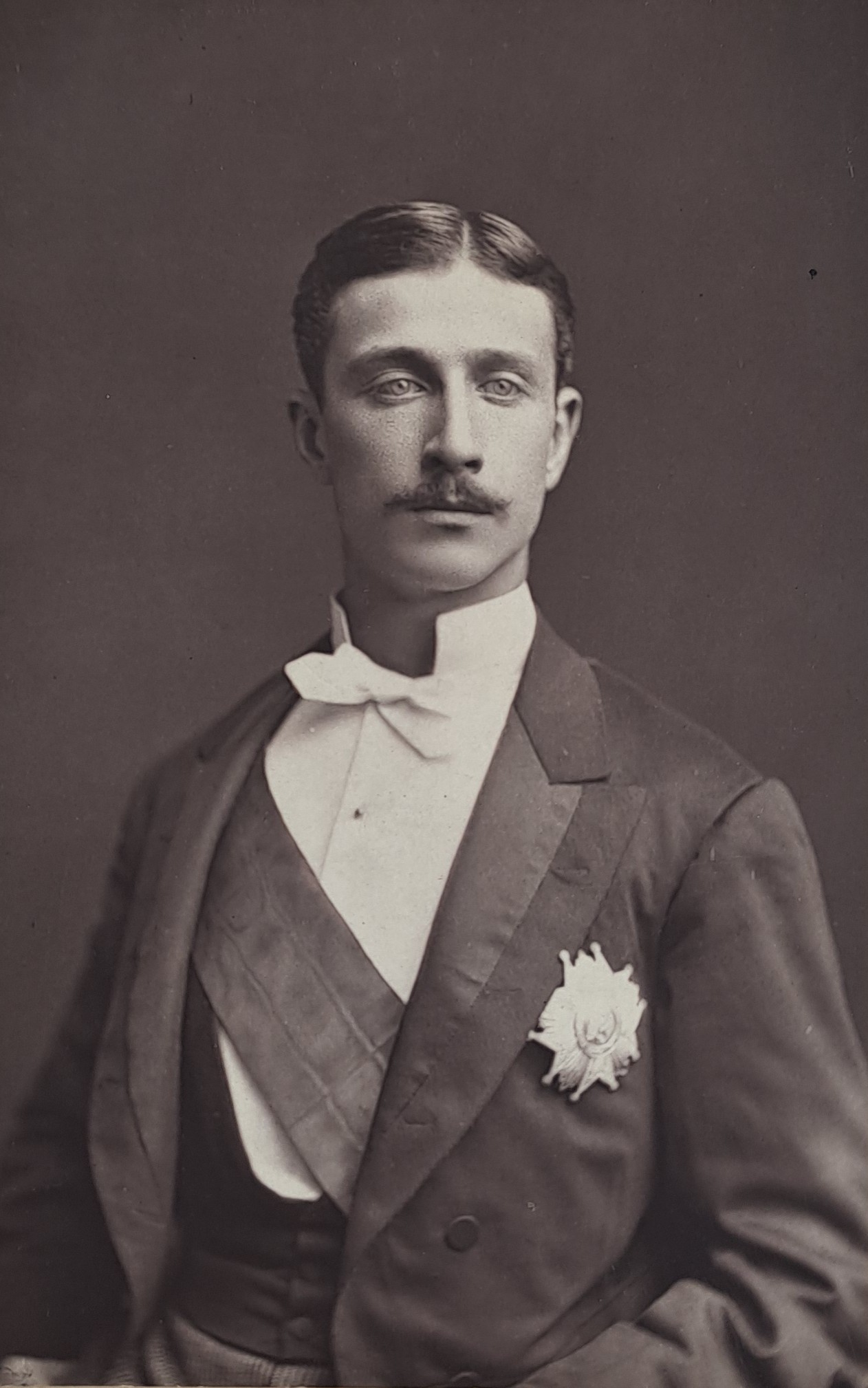
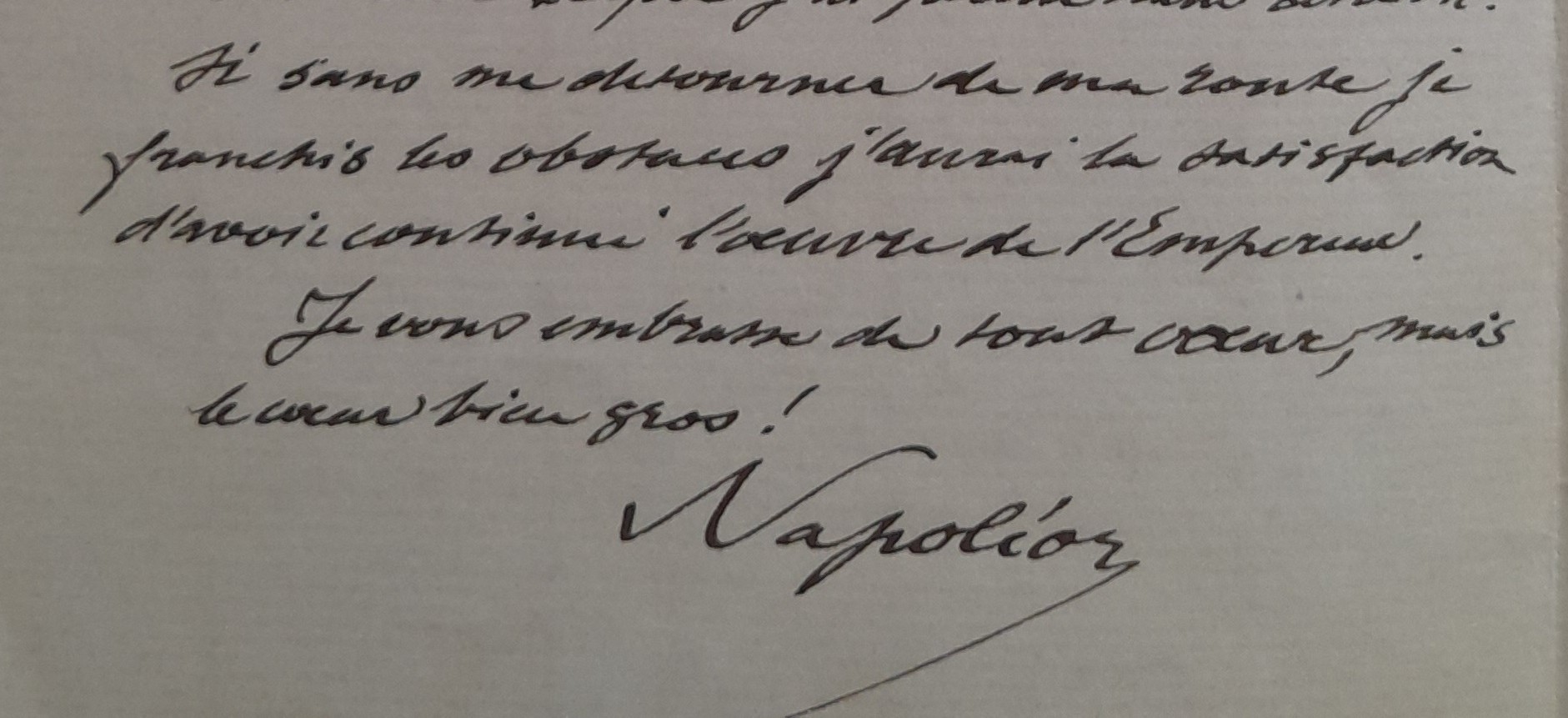
La Correspondance du Prince Impérial, largement méconnue, a été conservée principalement dans les archives familiales.
Quelques rares documents ont été reproduits dans la presse, du vivant du Prince et au cours de la période suivant sa disparition en 1879.
Il faut attendre la publication des <i>Mémoires</i> de son ancien répétiteur, Augustin Filon, en 1912, pour accéder à certaines lettres, et donc à la personnalité intime, du jeune Louis Napoléon. D’autres ouvrages, plus récents, ont également contribué à lever un coin du voile sur ses relations épistolaires.
Depuis près de 10 ans, les ventes de manuscrits du Prince Impérial se sont multipliées. La dispersion de collections prestigieuses (Forbes, Taittinger, Lachnitt …) ont permis d’inventorier et de retranscrire un certain nombre de missives.
Restée longtemps inédite et inaccessible aux chercheurs, cette Correspondance est désormais disponible en partie sur <i>Napoleonica les archives. </i>
</div>
_Le prince impérial, INV 288.182.1 © Fondation Napoléon_
</div>
###Sources manuscrites
● ARCHIVES NATIONALES
-<a href="https://www.siv.archives-nationales.culture.gouv.fr/siv/IR/FRAN_IR_053754"target="_blank">400 AP Archives Napoléon </a>
-<a href="https://www.siv.archives-nationales.culture.gouv.fr/siv/media/FRAN_IR_053754/cswxs41hra-1ev7qs3t1kb4l/DAFANCH97_MIC011000007"target="_blank">400 AP/44</a>, <i> Correspondance échangée entre Napoléon III et divers membres de sa famille, d’une part, et Rouher, d’autre part [Lettres du prince impérial à Rouher, 1873-1879] </i>
-<a href="https://www.siv.archives-nationales.culture.gouv.fr/siv/UD/FRAN_IR_053754/cswxs46w7a-1ph3e02zsn51r"target="_blank">400 AP/75</a>, <i> Correspondance du prince impérial, Louis-Napoléon Bonaparte. </i>
-<a href="https://www.siv.archives-nationales.culture.gouv.fr/siv/UD/FRAN_IR_053754/cswxs4gesm--1mjjwsv3bpj1i"target="_blank">400 AP/144</a>, <i>Napoléon III - Nubar Pacha [Le prince impérial, lettres, 1869-1874] </i>
-<a href="https://www.siv.archives-nationales.culture.gouv.fr/siv/IR/FRAN_IR_050305"target="_blank">31 AP Fonds Murat </a>
-<a href="https://www.siv.archives-nationales.culture.gouv.fr/siv/UD/FRAN_IR_050305/G9349"target="_blank">31 AP/66</a>, <i>Papiers de Joachim IV Murat (correspondance 1/2) </i>
● ARCHIVES DES MUSEES NATIONAUX
<a href="https://chateaudecompiegne.fr/"target="_blank"> Compiègne, musée national du palais </a>
● CATALOGUES DE VENTE
- Librairie Teissèdre, <i>catalogue « Second Empire » </i>, Paris, 2005
- Lafon-Castandet, <i>Autographe et documents</i>, Drouot, 18 octobre 2011
- Artcurial, <i>Philatélie, Numismatique, Armes et Souvenirs historiques</i>, Drouot, 17 décembre 2012 (souvenirs du Prince Impérial, lettres à Adrien Bizot)
- Olivier Doutrebente, <i>Autographes</i>, Drouot, 19 juin 2014
- Pierre Bergé & associés, <i>Autographes & Manuscrits</i>, Drouot, 25 juin 2015
- Osenat, <i>The Christopher Forbes collection</i>, Fontainebleau, 5-6 mars et 9 avril 2016
- Alde, <i>Correspondance Elie Faure</i>, Drouot, 30 octobre 2017
- Kalck-Le-Floc’h, <i> Tableaux, miniatures, manuscrits moghols, souvenirs historiques, objets vitrine, porcelaines & faïences, objets d’art, mobilier & tapis</i>, Drouot, 15 mai 2019
- Thierry de Maigret, <i> Collection Amaury Taittinger : souvenirs historiques – Louis XVII, le Roi de Rome & le Prince Impérial</i>, Drouot, 28 juin 2019
- Cortot & associés, <i> Décorations, insignes, souvenirs historiques (dispersion de la collection du général Charles Auguste Frossard) </i>, 1er février 2020
- Arts & Autographes, <i> catalogue n°90</i>, juin 2020
- Osenat, <i>l’Empire à Fontainebleau</i>, Fontainebleau, 28 juillet 2020
- Alde, <i>Lettres et manuscrits autographes</i>, Drouot, 20 janvier 2021
- Lydie Brioult, Drouot, 13 février 2021
- Le Havre enchères, <i>Passion XIX siècle, précieux souvenirs de collectionneurs, dont docteur Ferrand (Pierrefonds) et Joachim Carvallo – Ann Coleman (Villandry) et divers</i>, Le Havre, 6 juin 2021
- Osenat, <i>collection Jean-Claude Lachnitt</i>, Fontainebleau, 21 et 22 octobre 2023
● COLLECTIONS PRIVEES
- <i>Collection Pierre d’Harville</i>
###Sources imprimées
● BIBLIOGRAPHIE SELECTIVE
- <i>Balleyguier Eugène (dit Loudun Eugène) </i>, Journal de Fidus, 1890, Albert Savine éditeur
- <i>Hérisson (comte d’) </i>, Le Prince Impérial, 1890, éd. Paul Ollendorf
- <i>Martinet André</i>, Le Prince Impérial, 1895, éd. Léon Chailley
- <i>Espinasse Jules</i>, Mémoires, sans date [1928], ouvrage hors commerce
- <i>Filon Augustin</i>, Le Prince Impérial, souvenirs et documents, 1912, éd. Hachette
- <i>Lachnitt Jean-Claude</i>, Le Prince impérial « Napoléon IV », 1997, éd. Perrin
● PERIODIQUES
- Pierre de Bourgoing, « fils d’Empereur », <i>Je sais tout</i>, 15 mai 1909
- « Une correspondance inédite : le Prince Impérial et Ernest Lavisse », <i>Revue des deux Mondes</i>, 1<sup>er</sup> avril 1929
<div class="large-image">
_Signature du prince impérial, décembre 1875, collection privée_
</div>
Mis en ligne, juin 2026 |
|---|
| contenu de la page de présentation en markdown (en) | #The General Correspondence of the Imperial Prince
##Introduction to the corpus
| Title | The General Correspondence of the Imperial Prince |
|----------|-------------------------------------------------|
| Date | 1860-1879 |
| Authors | Napoléon, Eugène, Louis, Jean, Joseph Bonaparte, Prince Impérial |
| Volume of material |153 letters|
| Content overview | This correspondence enlightens the Prince Imperial life (1856-1879), he is the only son of Napoléon III and Eugenie, he disapeared at the young age of 23 during a reconnaissance in Zulu land (Southern Africa) on 1st June 1879. From his childhood, under the gold of imperial palaces, to exil, his character is coming into its own; he is determined and fully aware of the lofty mission that his name imposes upon him. |
[See documents](https://www.napoleonica.org/fr/collections/Prince_Imp%C3%A9rial/search?page=0&pageSize=20)
<br>
<br>
« I do not know whether, in time, this correspondence will be published in full: on that day, the Prince would definitively take his place among the most interesting figures and the most gifted minds of the century in which he lived »
(Augustin Filon, The Imperial Prince, souvenirs et documents, 1912, éd. Hachette ; p. 148).
##Sources for the General Correspondence
<div class="text-small-image">
<div class="side-text">
<br>
<br>
<br>
The Imperial Prince’s correspondence, largely unknown, has been preserved mainly in the family archives.
A few rare documents were published in the press, both during the Prince’s lifetime and in the period following his disappearance in 1879.
It was not until the publication of the Memoirs of his former tutor, Augustin Filon, in 1912, that access was gained to certain letters, and thus to the private life of the young Louis Napoleon. Other, more recent works have also helped to lift a corner of the veil on his correspondence.
For nearly 10 years, sales of the Imperial Prince’s manuscripts have increased significantly. The dispersal of prestigious collections (Forbes, Taittinger, Lachnitt, etc.) has made it possible to catalogue and transcribe a number of letters.
Long unpublished and inaccessible to researchers, this Correspondence is now partially available on Napoleonica les archives.
</div>

_The Imperial Prince, INV 288.182.1 © Fondation Napoléon_
</div>
##Manuscript sources for the General Correspondence in France
● ARCHIVES NATIONALES
- <a href="https://www.siv.archives-nationales.culture.gouv.fr/siv/IR/FRAN_IR_053754"target="_blank">400 AP Archives Napoléon </a>
- <a href="https://www.siv.archives-nationales.culture.gouv.fr/siv/media/FRAN_IR_053754/cswxs41hra-1ev7qs3t1kb4l/DAFANCH97_MIC011000007"target="_blank">400 AP/44</a>, <i> Correspondance échangée entre Napoléon III et divers membres de sa famille, d’une part, et Rouher, d’autre part [Lettres du prince impérial à Rouher, 1873-1879] </i>
- <a href="https://www.siv.archives-nationales.culture.gouv.fr/siv/UD/FRAN_IR_053754/cswxs46w7a-1ph3e02zsn51r"target="_blank">400 AP/75</a>, <i> Correspondance du prince impérial, Louis-Napoléon Bonaparte. </i>
- <a href="https://www.siv.archives-nationales.culture.gouv.fr/siv/UD/FRAN_IR_053754/cswxs4gesm--1mjjwsv3bpj1i"target="_blank">400 AP/144</a>, <i>Napoléon III - Nubar Pacha [Le prince impérial, lettres, 1869-1874] </i>
- <a href="https://www.siv.archives-nationales.culture.gouv.fr/siv/IR/FRAN_IR_050305"target="_blank">31 AP Fonds Murat </a>
- <a href="https://www.siv.archives-nationales.culture.gouv.fr/siv/UD/FRAN_IR_050305/G9349"target="_blank">31 AP/66</a>, <i>Papiers de Joachim IV Murat (correspondance 1/2) </i>
● ARCHIVES DES MUSEES NATIONAUX
- <a href="https://chateaudecompiegne.fr/"target="_blank"> Compiègne, musée national du palais </a>
● CATALOGUES DE VENTE
- Librairie Teissèdre, <i>catalogue « Second Empire » </i>, Paris, 2005
- Lafon-Castandet, <i>Autographe et documents</i>, Drouot, 18 octobre 2011
- Artcurial, <i>Philatélie, Numismatique, Armes et Souvenirs historiques</i>, Drouot, 17 décembre 2012 (souvenirs du Prince Impérial, lettres à Adrien Bizot)
- Olivier Doutrebente, <i>Autographes</i>, Drouot, 19 juin 2014
- Pierre Bergé & associés, <i>Autographes & Manuscrits</i>, Drouot, 25 juin 2015
- Osenat, <i>The Christopher Forbes collection</i>, Fontainebleau, 5-6 mars et 9 avril 2016
- Alde, <i>Correspondance Elie Faure</i>, Drouot, 30 octobre 2017
- Kalck-Le-Floc’h, <i> Tableaux, miniatures, manuscrits moghols, souvenirs historiques, objets vitrine, porcelaines & faïences, objets d’art, mobilier & tapis</i>, Drouot, 15 mai 2019
- Thierry de Maigret, <i> Collection Amaury Taittinger : souvenirs historiques – Louis XVII, le Roi de Rome & le Prince Impérial</i>, Drouot, 28 juin 2019
- Cortot & associés, <i> Décorations, insignes, souvenirs historiques (dispersion de la collection du général Charles Auguste Frossard) </i>, 1er février 2020
- Arts & Autographes, <i> catalogue n°90</i>, juin 2020
- Osenat, <i>l’Empire à Fontainebleau</i>, Fontainebleau, 28 juillet 2020
- Alde, <i>Lettres et manuscrits autographes</i>, Drouot, 20 janvier 2021
- Lydie Brioult, Drouot, 13 février 2021
- Le Havre enchères, <i>Passion XIX siècle, précieux souvenirs de collectionneurs, dont docteur Ferrand (Pierrefonds) et Joachim Carvallo – Ann Coleman (Villandry) et divers</i>, Le Havre, 6 juin 2021
- Osenat, <i>collection Jean-Claude Lachnitt</i>, Fontainebleau, 21 et 22 octobre 2023
● COLLECTIONS PRIVEES
- <i>Collection Pierre d’Harville</i>
##Printed sources for the General Correspondence in France
● BIBLIOGRAPHIE SELECTIVE
- <i>Balleyguier Eugène (dit Loudun Eugène) </i>, Journal de Fidus, 1890, Albert Savine éditeur
- <i>Hérisson (comte d’) </i>, Le Prince Impérial, 1890, éd. Paul Ollendorf
- <i>Martinet André</i>, Le Prince Impérial, 1895, éd. Léon Chailley
- <i>Espinasse Jules</i>, Mémoires, sans date [1928], ouvrage hors commerce
- <i>Filon Augustin</i>, Le Prince Impérial, souvenirs et documents, 1912, éd. Hachette
- <i>Lachnitt Jean-Claude</i>, Le Prince impérial « Napoléon IV », 1997, éd. Perrin
● PERIODIQUES
- Pierre de Bourgoing, « fils d’Empereur », <i>Je sais tout</i>, 15 mai 1909
- « Une correspondance inédite : le Prince Impérial et Ernest Lavisse », <i>Revue des deux Mondes</i>, 1<sup>er</sup> avril 1929
<div class="large-image">

_Signature of the Imperial Prince, December 1875, private collection_
</div>
Online, june 2026 |
|---|
| contexte en markdown (fr) | #Le prince impérial, la vie d'un météore
##L’ENFANT DE FRANCE.
<div class="text-small-image">
<div class="side-text">
Napoléon, Eugène, Louis, Jean, Joseph nait aux Tuileries, le 16 mars 1856.
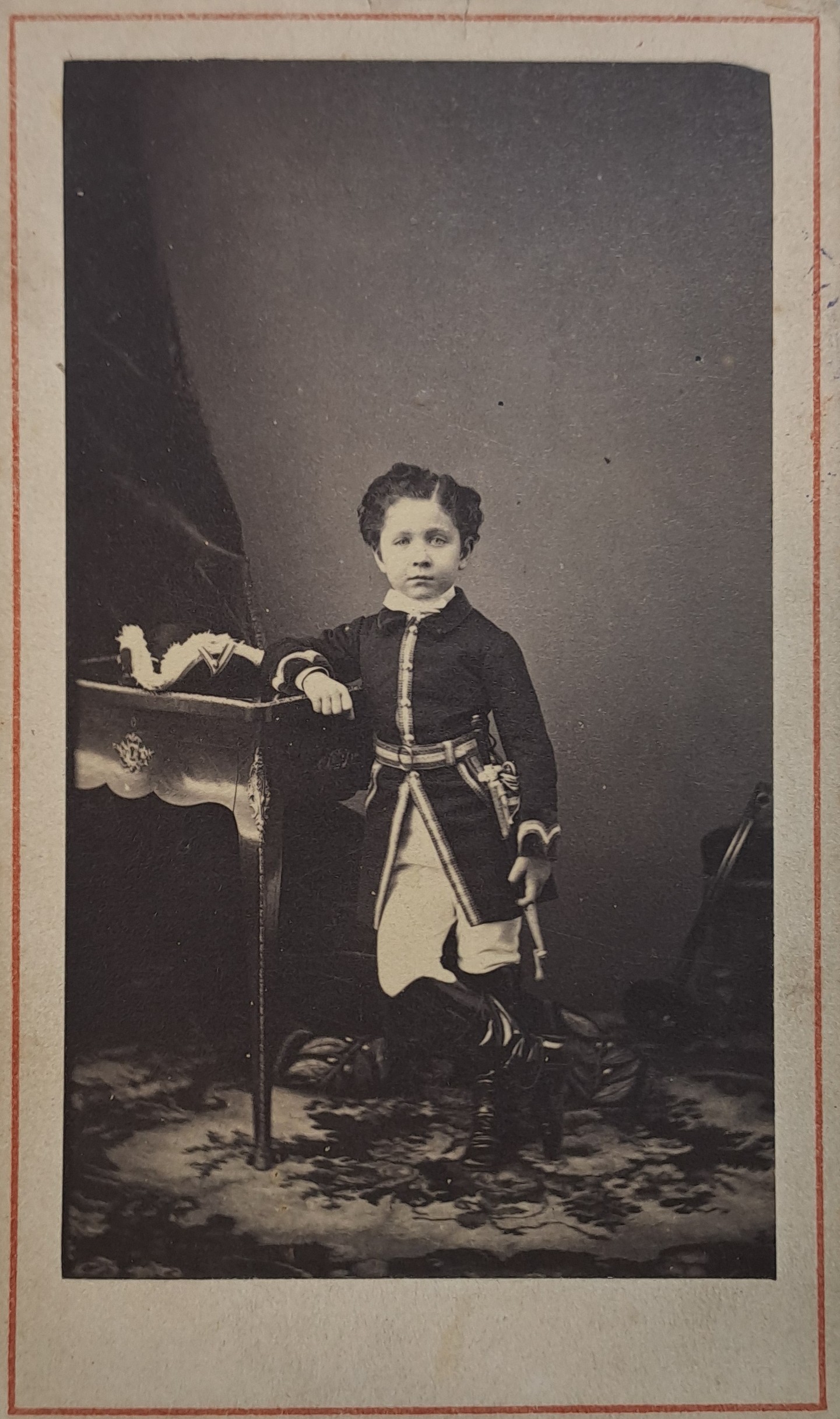
Choyé par un père aimant, élevé par une mère attentive et protectrice, le bébé impérial grandit, entouré de l’amour des siens. <i>Loulou</i> est un enfant franc et affectueux, apportant partout sa gentillesse et sa gaieté.
Prince et soldat, Louis voue un attachement sincère à l’armée, pilier du nouveau régime. Son père l’a inscrit sur les registres du 1er régiment des grenadiers de la garde, le 8 décembre 1856. Il veille à l’associer aux grands défilés militaires (le 14 août 1859, au retour de l’armée d’Italie) et manœuvres, notamment au camp de Chalons, qu’il fréquente dès 1860.
En 1863, le « Petit Prince » quitte la tutelle de ses gouvernantes pour être placé entre les mains d’un premier précepteur, Francis Monnier.
Il noue, à cette époque, des relations étroites et définitives avec les fils des familiers des Souverains : Louis Conneau, Jules Espinasse, Scipion et Gaston Corvisart, Pierre de Bourgoing, Adrien Bizot …
Le 15 mars 1867, la maison militaire du Prince Impérial est constituée. A sa tête est placé le général Frossard, nommé gouverneur ; sous ses ordres, quatre aides de camp sont désignés : le lieutenant-colonel marquis d’Espeuilles, le commandant comte de Ligniville, le commandant Lamey et le capitaine de frégate Duperré.
Cette même année, Augustin Filon se substitue à Francis Monnier, dont l’enseignement a fait l’objet de vives critiques. Le jeune répétiteur ne quittera son élève qu’à l’issue de sa scolarité à Woolwich, en 1875.
</div>
_Le prince impérial enfant, INV 288.132 © Fondation Napoléon_
</div>
##LA GUERRE.
<div class="small-image-text">
_Le prince impérial en uniforme de lieutenant, INV 288.156 © Fondation Napoléon_
<div class="side-text">
<br>
<br>
<br>
<br>
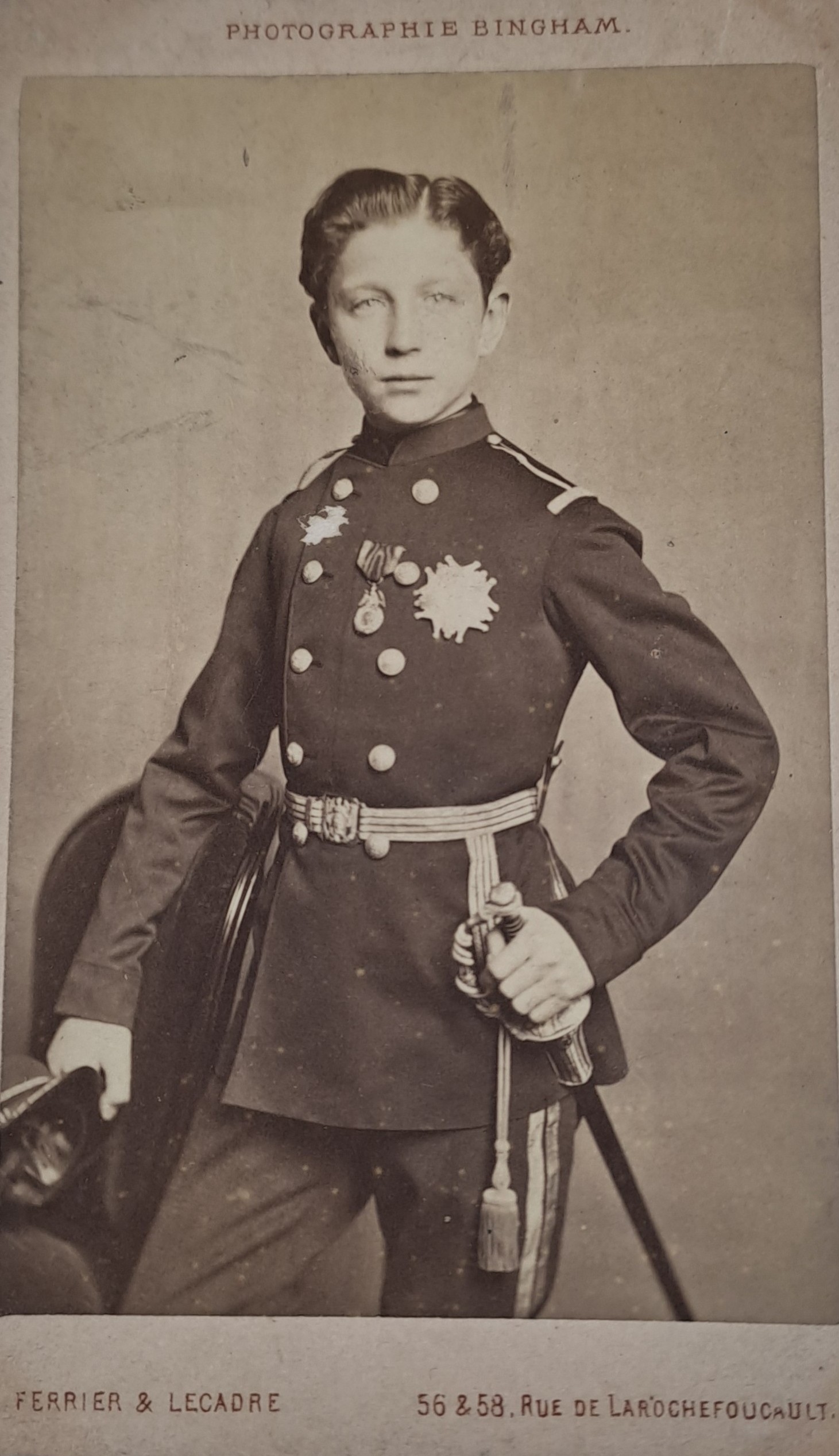
Le 19 juillet 1870, la France déclare la guerre à la Prusse. La campagne commence favorablement ; un bref engagement, mené le 2 août par le 2<sup>e</sup> corps du général de division Charles Frossard, gouverneur du Prince, contre la ville de Sarrebrück, offre à la France une première victoire. Le Prince Impérial participe à la bataille et y reçoit le baptême du feu. Loin de pouvoir consolider cet avantage, l’armée impériale va connaitre une succession de défaites : Wissembourg le 4 août, Frœschwiller-Woerth le 6 août, Gravelotte le 16 août.
Inquiet de la tournure des évènements, l’Empereur doit se séparer de son fils, le 27 août à Tourteron. Le Prince Impérial est alors sujet aux plus vifs tourments : isolé, souffrant de l’infortune et de la déroute de nos armes, l’héritier du trône erre sur les routes de France, escorté par un peloton des Cent-gardes.
Le 2 septembre, informé de la capitulation de Sedan, il est conduit en Belgique, d’où il s’embarque pour l’Angleterre. Il arrive à Hastings le 6 septembre. Il y est rejoint par Augustin Filon, puis par sa mère, l’Impératrice, le 9 septembre.
</div>
</div>
##LES PREMIERES ANNEES D’EXIL.
L'Impératrice et Louis aménagent le 24 septembre 1870 à Chislehurst, dans le comté de Kent, dans une maison sobre, aux briques rouges : <i>Camden Place.</i> Elle sera la dernière résidence du Prince Impérial. La vie s'y organise très rapidement ; quelques fidèles traversent la Manche pour les y retrouver, constituant autour de la famille déchue une petite Cour.
Le 20 mars, l’Empereur quitte l’Allemagne et débarque à Douvres, où il est accueilli par l’Impératrice et le Prince impérial. Le père et le fils se retrouvent après une longue et éprouvante absence. Napoléon III entretient l’espoir d’un retour aux affaires et prétend renouveler l’expérience glorieuse du « vol de l’Aigle ». Le vieux monarque emploiera ses dernières années à former son fils en lui enseignant l’histoire, les relations internationales, la politique.
Il est également suggéré de lui faire suivre une scolarité au King’s college, à Londres ; l’expérience s’avère décevante et ne sera pas reconduite.
##LE CADET DE WOOLWICH.
<div class="text-small-image">
<div class="side-text">
<br>
<br>
En octobre 1872, à l’initiative de Napoléon III, Louis se présente avec son ami Louis Conneau aux examens d’entrée de l’Académie royale de Woolwich : il est classé 27e sur 30. Le Prince Impérial s’applique à suivre cette formation militaire en soldat, et non pas en Prince. Il redouble d’ardeur et d’efforts pour aplanir les difficultés, nombreuses, qui se présentent à lui. A chaque examen, il gagne des places, suscitant l’admiration du corps enseignant et de ses coreligionnaires.
Le 19 février 1875, le Prince sortira 7<sup>e</sup> sur 34 de l’Ecole, avec le grade de lieutenant d’artillerie. Ce sera un incontestable succès. Ses études à Woolwich terminées, Louis n’en considèrera pas moins sa formation militaire inachevée ; il se fera attaché à une batterie au camp d’Aldershot.
</div>
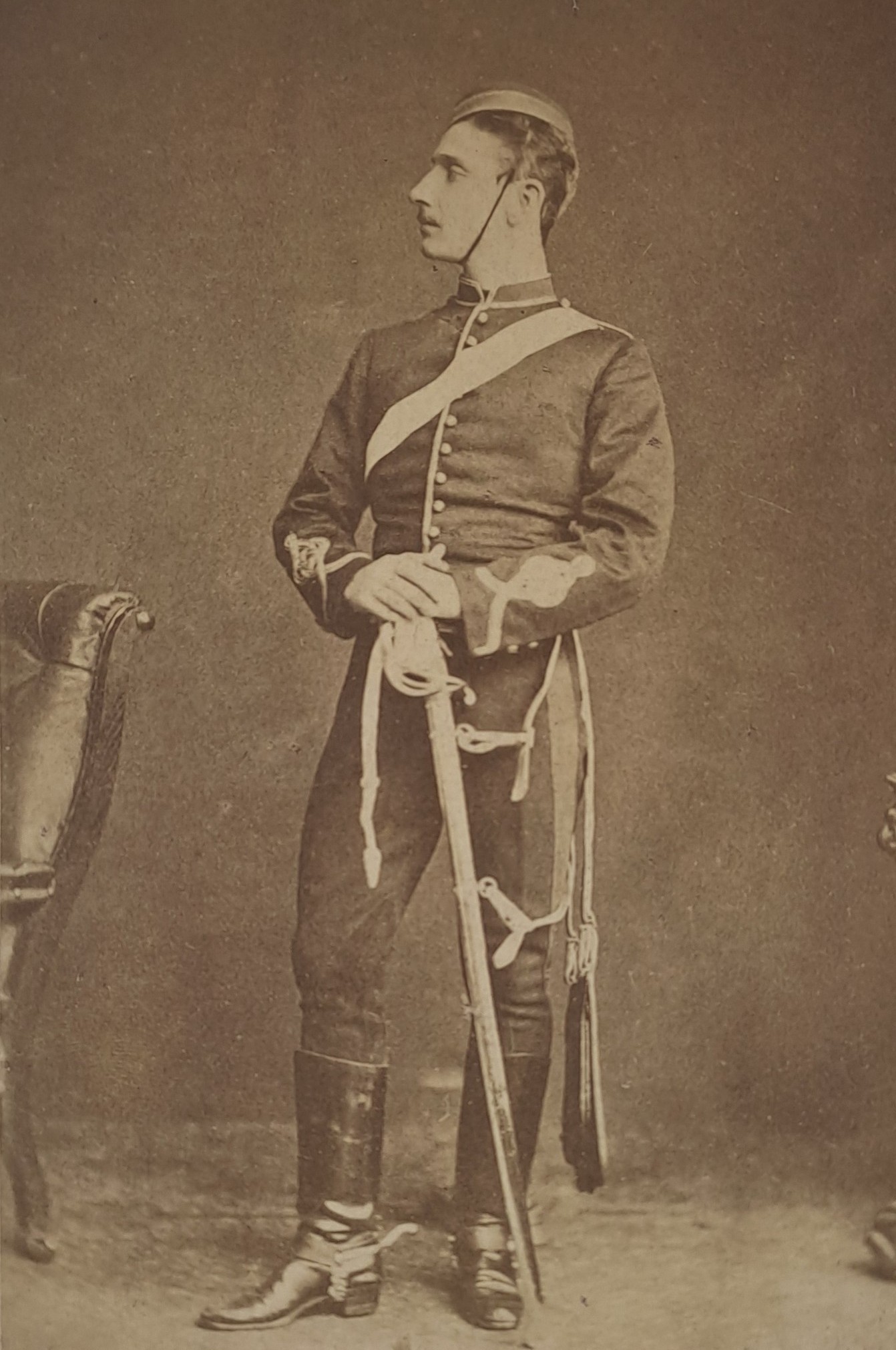
_Le Prince Impérial en uniforme de cadet de Woolwich, INV 288.132 © Fondation Napoléon_
</div>
##LA MORT DE NAPOLEON III.
Le 9 janvier 1873, le Prince Impérial est informé de l’état désespéré de l’Empereur par le comte Clary, venu précipitamment le chercher. Il ne le reverra pas vivant.
A la mort de Napoléon III, Louis entend se montrer digne de l’héritage paternel. Augustin Filon écrit dans ses <i>Souvenirs : « Il sacrifia tout à son nouveau devoir : son repos, sa liberté, très souvent ses plaisirs, et jusqu’à ses goûts artistiques qui lui tenaient tant au cœur ».</i>
##LA MAJORITE CONSTITUTIONNELLE DU PRINCE IMPERIAL.
<div class="image-text">
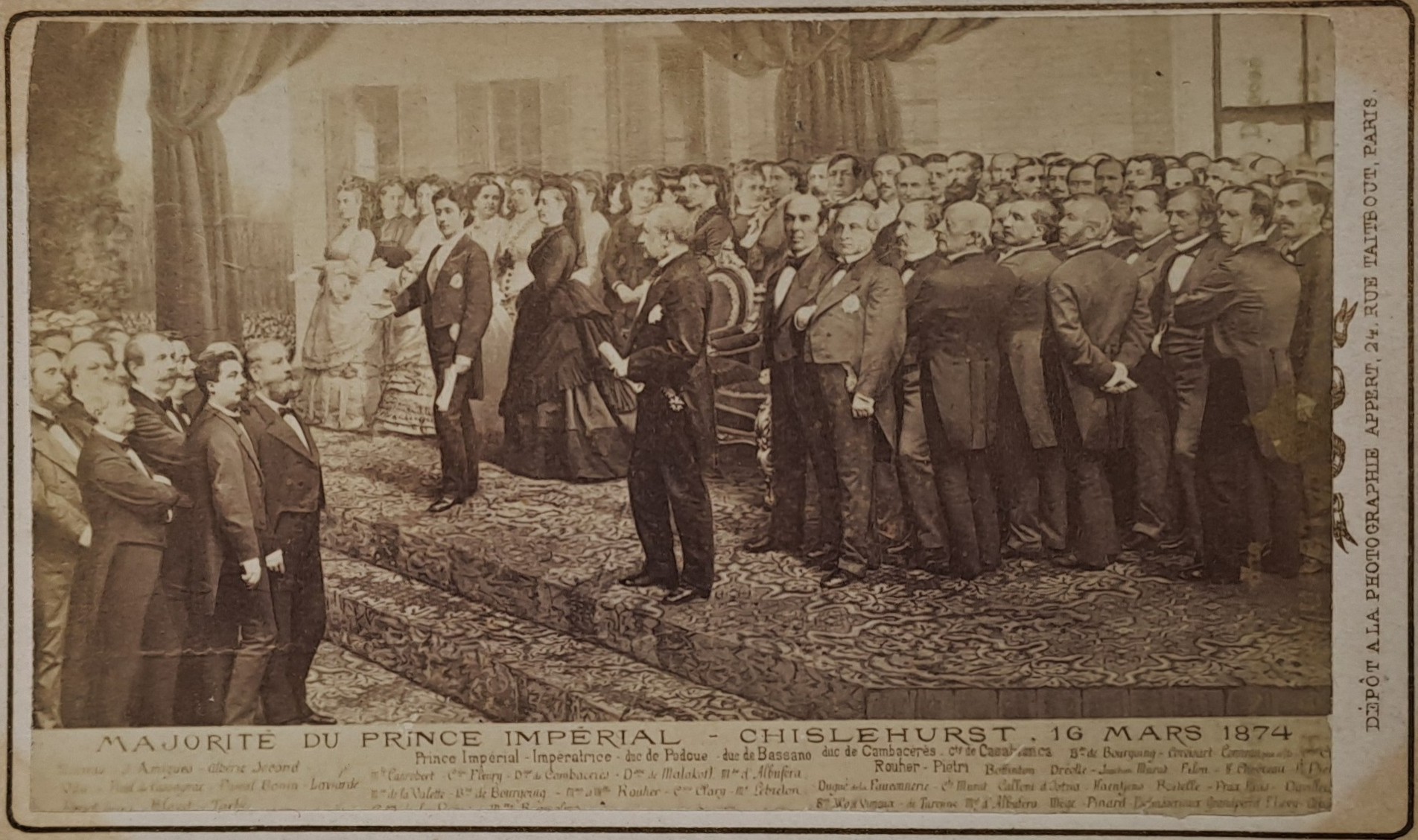
_La majorité du prince impérial, 16 mars 1874, INV 288.178 © Fondation Napoléon_
<div class="side-text">
<br>
Son discours du 16 mars 1874 – prononcé devant 7 000 fidèles venus à Camden Place, à l’occasion de ses 18 ans – lui permet de se poser officiellement en prétendant. Il érige le plébiscite en dogme, le considérant comme l’instrument propre à fonder un gouvernement définitif en France : <i>« Le plébiscite, c’est le salut et c’est le droit, la force rendue au pouvoir et l’ère des longues sécurités rouvertes au pays ; c’est un grand parti national, sans vainqueurs ni vaincus, s’élevant au-dessus de tous pour les réconcilier »</i> et se dit prêt à se soumettre à l’arbitrage des français : <i>« La France, librement consultée, jettera-t-elle les yeux sur le fils de Napoléon III ? […]. Quand l’heure sera venue, si un autre gouvernement réunit les suffrages du plus grand nombre, je m’inclinerai avec respect devant la décision du pays. Si le nom des Napoléons sort pour la huitième fois des urnes populaires, je suis prêt à accepter la responsabilité que m’imposerait le vote de la nation ».</i>
</div>
</div>
##LE CHEF DE PARTI.
Le Prince Impérial porte une attention particulière aux progrès enregistrés par les radicaux aux élections législatives de février 1876 et d’octobre 1877, redoutant une victoire génératrice d’instabilité. Léon Gambetta et Charles Floquet, principaux chefs de file du parti radical, prônent en effet la séparation de l’Église et de l’Etat, ainsi que l’abolition des armées permanentes. Ce programme aurait pour résultat, aux yeux des forces conservatrices, d’attenter aux fondations mêmes de la société française.
Le Prince doit également constituer son autorité auprès de partisans peu enclins, parfois, à défendre ses positions mesurées. La tâche n’est guère aisée et la loyauté due à son nom et à son titre ne garantit pas toujours, dans les rangs des députés bonapartistes, une discipline entière. Il a souvent à combattre les découragements ou l’excès de zèle de certains parlementaires.
##LE SOLDAT.
Le Troisième Empire, à la promotion duquel se dévoue le jeune hérault, ne saurait occulter sa vocation première : être soldat. <i>« Ce qui touche à l’armée, comme vous le savez du reste, m’intéresse ou plutôt me passionne. Je n’aime pas seulement l’armée française parce que je suis soldat et Français jusqu’à la moelle, mais encore parce que je considère qu’en elle seule réside la force capable de sauver la société française, d’abord, et de lui rendre ensuite sa grandeur »</i>, confiera-t-il un jour au duc d’Elchingen.
##LA CAMPAGNE DU ZULULAND.
<div class="text-small-image">
<div class="side-text">
Le Prince rêve de gloire ; il a soif <i>« de sentir la poudre »</i>. Il ne craint rien de moins que d’être condamné à l’inaction, s’étiolant comme le fit son cousin, l’Aiglon.
La bataille d’Isandhlwana en Afrique du Sud, le 22 janvier 1879, au cours de laquelle 20.000 zoulous anéantissent 2 formations d’infanterie coloniale britannique (les 1er et 2e bataillons du 24e régiment), lui offre l’opportunité d’entrer en campagne.
Après une première demande infructueuse adressée au gouvernement de Sa Très Gracieuse Majesté, il obtient le 24 février – avec le soutien actif de la reine Victoria et de sa mère, l’Impératrice - l’autorisation d’accompagner l’armée britannique, en qualité d’observateur.
Le 27 février, le Prince quitte Chislehurst pour se rendre à Southampton, d’où il embarque pour l’Afrique du Sud. Le 26 mars, le steamer Le Danube entre en rade de Capetown. Napoléon souffre, à son arrivée, d’un léger accès de fièvre et doit garder le lit quelques jours. Rétabli, il est reconnu apte à faire campagne et obtient la faveur d’être attaché à l’état-major général, auprès de Lord Chelmsford, commandant en chef des troupes britanniques. Suivent de longues chevauchées à travers le pays : Durban, Maritzburg, Ladysmith … et enfin le Zululand. Ivre d’action, le Prince recherche toute occasion de prouver sa bravoure. Le 19 mai 1879, se joignant à une petite troupe d’irréguliers placée sous les ordres du major Bettington, il pénètre au-delà du <i>Blood River</i> et donne l’assaut à un village zulu. Le nom de <i>kraal Napoléon</i> est alors donné à la position occupée, en hommage à la vaillance et à l’intrépidité du Prince. De retour au campement, Louis est chargé d’élaborer le projet de construction d’un fort à <i>Conference Hill</i>, puis, le 31 mai, de déterminer le site du second campement où doit s’arrêter l’armée, le soir du 2 juin.
</div>
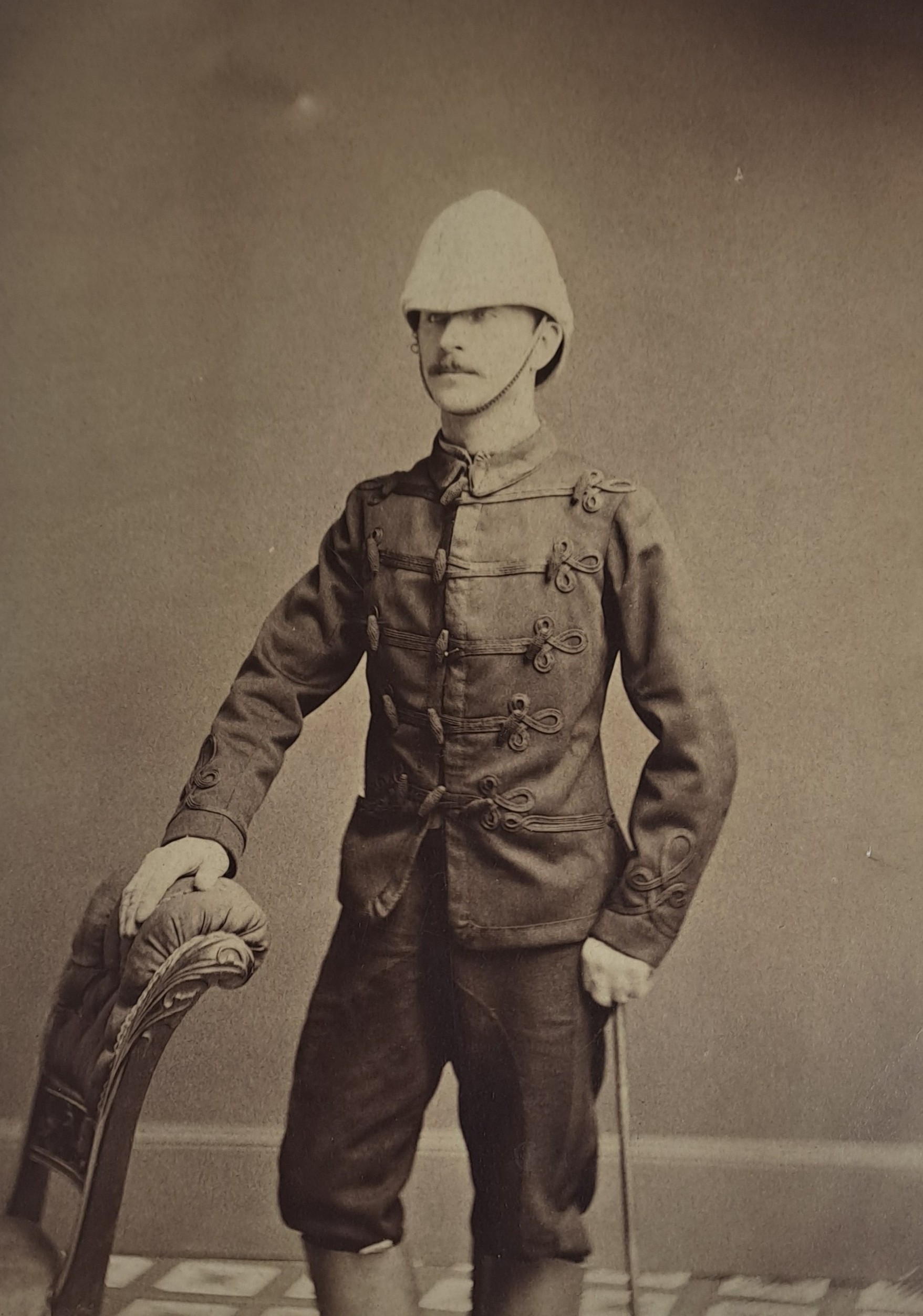
_Le prince impérial en uniforme anglais, INV 288.196.2 © Fondation Napoléon_
</div>
##LA TRAGEDIE.
C’est dans ce but que Napoléon part en reconnaissance, le 1<sup>er</sup> juin 1879, accompagné d’une escorte dont le commandement a été confié au capitaine Carey. Le Prince Impérial tombe quelques heures plus tard, seul, en territoire ennemi, le corps percé de dix-sept coups de sagaies, tous reçus de face. Les Zulus, témoignant de son grand courage, diront de lui qu’il s’est battu comme un lion.
La mort tragique de Napoléon IV mit fin aux espoirs d’une restauration impériale, précipitant la disparition d’un parti populaire, rival redouté de la jeune République.
<div class="medium-image">
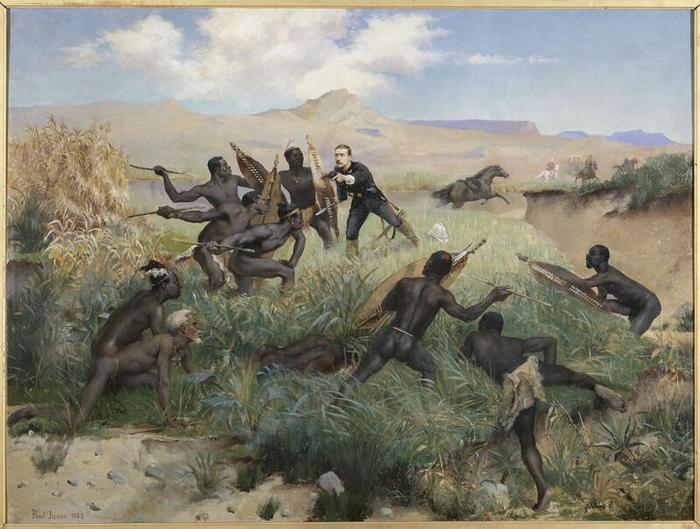
_Mort du Prince impérial au Zoulouland, 1er juin 1879, par Paul Jamin, 1882, coll. Château de Compiègne © RMN – Grand Palais (Château de Compiègne) / Jean Hutin_
</div>
Mis en ligne, juin 2026 |
|---|
| contexte en markdown (en) | #The Imperial Prince: A Life as Fleeting as a Shooting Star
##THE CHILD OF FRANCE.
<div class="text-small-image">
<div class="side-text">
Napoleon, Eugène, Louis, Jean, Joseph was born at the Tuileries on 16th March 1856. Cherished by a loving father and raised by a caring and protective mother, the imperial baby grew up surrounded by the love of his family. <i>Loulou</i> was an open-hearted and affectionate child, spreading his kindness and cheerfulness wherever he went.
Both a Prince and a soldier, Louis is sincerely devoted to the army, the pillar of the new regime. His father enrolled him in the 1st Regiment of the Grenadiers of the Guard on 8th december 1856. He made that Louis took part in major military parades (on 14 August 1859, upon the return of the Army of Italy) and manœuvres, especially at the Chalons camp which he visited frequently since 1860.
In 1863, the ‘Little Prince’ left the care of his governesses and was placed in the hands of his first tutor, Francis Monnier.
During this period, he forged close and lasting relationships with the sons of the Sovereigns’ close associates: Louis Conneau, Jules Espinasse, Scipion and Gaston Corvisart, Pierre de Bourgoing, Adrien Bizot … On 15 March 1867, the Imperial Prince’s military household was established. At its head was General Frossard, appointed governor; under his command, four aides-de-camp were appointed: Lieutenant-Colonel the Marquis d’Espeuilles, Major the Count de Ligniville, Major Lamey and Commander Duperré.
That same year, Augustin Filon took over from Francis Monnier, whose teaching had come in for sharp criticism. The young tutor did not leave his pupil’s side until the end of his schooling at Woolwich in 1875.
</div>

_The Imperial Prince as a child, INV 288.132 © Fondation Napoléon_
</div>
##THE WAR.
<div class="small-image-text">

_The Imperial Prince in a lieutenant’s uniform, INV 288.156 © Fondation Napoléon_
<div class="side-text">
<br>
<br>
<br>
<br>
On 19th July 1870, France declared war on Prussia. The campaign got off to a promising start; a brief engagement on 2 August, led by the 2nd Corps under Major General Charles Frossard, the Prince’s governor, against the town of Saarbrücken, secured France’s first victory. The Imperial Prince took part in the battle and experienced his baptism of fire there. Far from being able to consolidate this advantage, the Imperial Army went on to suffer a series of defeats: Wissembourg on 4 August, Frœschwiller-Woerth on 6 August, Gravelotte on 16 August …
Concerned by the turn of events, the Emperor was forced to part with his son on 27th August at Tourteron. The Imperial Prince was then subjected to the most intense torment: isolated, suffering from misfortune and the rout of our forces, the heir to the throne wandered the roads of France, escorted by a platoon of the Cent-gardes.On 2nd September, having been informed of the surrender at Sedan, he was taken to Belgium, from where he set sail for England. He arrived in Hastings on 6th September. He was joined there by Augustin Filon, and then by his mother, the Empress, on 9th September.
</div>
</div>
##THE EARLY YEARS IN EXILE.
On 24th September 1870, the Empress and Louis moved to Chislehurst, in the county of Kent, into a modest red-brick house: <i>Camden Place.</i> It will be the Imperial Prince’s final residence. Life there quickly settled into a routine; a few loyal followers crossed the Channel to join them, forming a small court around the fallen family.
On 20th March, the Emperor left Germany and disembarked at Dover, where he was welcomed by the Empress and the Imperial Prince. Father and son were reunited after a long and trying separation. Napoleon III maintained hopes of a return to power and sought to repeat the glorious experience of the ‘Flight of the Eagle’. The elderly monarch will spend his final years educating his son, teaching him history, international relations and politics.
He also suggested that the Imperial Prince should attend King’s College in London; the experience was proven disappointing and was not repeated.
##THE WOOLWICH CADET.
<div class="text-small-image">
<div class="side-text">
<br>
<br>
In October 1872, at the initiative of Napoleon III, Louis sat the entrance examinations for the Royal Academy at Woolwich alongside his friend Louis Conneau: he was ranked 27th out of 30. The Imperial Prince applied himself to this military training as a soldier, not as a prince. He redoubled his zeal and efforts to overcome the many difficulties that arose. With each examination, he improved his ranking, earning the admiration of the teaching staff and his fellow students.
On 19th February 1875, the Prince graduated 7th out of 34 from the Academy, with the rank of lieutenant in the Artillery. It was an unquestionable success. Although his studies at Woolwich were complete, Louis nevertheless considered his military training to be unfinished; he was attached to a battery at Aldershot Barracks.
</div>

_The Imperial Prince in the uniform of a cadet at Woolwich, INV 288.132 © Fondation Napoléon_
</div>
##THE DEATH OF NAPOLEON III.
On 9th January 1873, the Crown Prince was informed of the Emperor’s desperate condition by Count Clary, who had come to fetch him in a great hurry. He will never see him alive again.
On the death of Napoleon III, Louis was resolved to prove himself worthy of his father’s legacy. Augustin Filon writes in his <i>*Souvenirs*: ‘He sacrificed everything to his new duty: his rest, his freedom, very often his pleasures, and even his artistic tastes, which were so dear to his heart.’</i>
##THE IMPERIAL PRINCE’S CONSTITUTIONAL MAJORITY.
<div class="image-text">

_Prince’s constitutional majority, 16th March 1874, INV 288.178 © Fondation Napoléon_
<div class="side-text">
<br>
His speech of 16th March 1874 – delivered before 7,000 supporters who had gathered at Camden Place to mark his 18th birthday – enabled him to officially establish himself as a pretender. He elevated the plebiscite to the status of a dogma, regarding it as the appropriate instrument for establishing a permanent government in France: <i>‘The plebiscite is salvation and it is justice, power restored to the people and the dawn of a new era of lasting security for the country; it is a great national movement, with neither victors nor vanquished, rising above all to reconcile them’</i> and declared himself ready to submit to the judgement of the French people:<i> “Will France, when freely consulted, turn its eyes to the son of Napoleon III? […]. When the time comes, if another government wins the support of the majority, I shall bow respectfully to the country’s decision. If the name of the Napoleons emerges from the ballot boxes for the eighth time, I am ready to accept the responsibility that the nation’s vote would impose upon me.”</i>
</div>
</div>
##THE PARTY LEADER.
The Crown Prince paid particular attention to the gains made by the Radicals in the parliamentary elections of February 1876 and October 1877, fearing that a victory on their part would lead to instability. Léon Gambetta and Charles Floquet, the main leaders of the Radical Party, advocated the separation of Church and State, as well as the abolition of standing armies. In the eyes of the conservative forces, this programme would undermine the very foundations of French society.
The Prince must also establish his authority amongst supporters who are, at times, reluctant to defend his measured positions. This is no easy task, and the loyalty owed to his name and title does not always guarantee complete discipline amongst the ranks of the Bonapartist MPs. He often has to contend with the discouragement or overzealousness of certain parliamentarians.
##THE SOLDIER.
The Third Empire, to the promotion of which the young herald is devoted, must not overshadow his primary calling: to be a soldier. <i> « Anything to do with the army, as you well know, interests me or rather, fascinates me. I love the French army not only because I am a soldier and French to the core, but also because I believe that it alone possesses the strength capable of saving French society, first and foremost, and then restoring its greatness » </i>, he confided one day to the Duke of Elchingen.
##THE ZULULAND CAMPAIGN.
<div class="text-small-image">
<div class="side-text">
The Prince dreams of glory; he longs to <i>‘smell gunpowder’</i>. He fears nothing more than being condemned to inaction, wasting away as his cousin, the Eaglet, did.
The Battle of Isandhlwana in South Africa on 22 January 1879, in which 20,000 Zulus routed two British colonial infantry formations (the 1st and 2nd Battalions of the 24th Regiment), offered him the opportunity to enter the campaign.
Following an initial unsuccessful request to Her Most Gracious Majesty’s Government, on 24th February, with the active support of Queen Victoria and her mother, the Empress, he obtained permission to accompany the British army as an observer.
On 27th February, the Prince left Chislehurst for Southampton, from where he set sail for South Africa. On 26th March, the steamship <i>Le Danube</i> entered the harbour of Cape Town. Upon his arrival, Napoleon suffered a slight case of fever and was confined to bed for a few days. Once recovered, he was deemed fit for campaign duty and was granted the privilege of being attached to the General Staff, under Lord Chelmsford, Commander-in-Chief of the British forces. Long rides across the country followed: Durban, Maritzburg, Ladysmith… and finally Zululand. Thirsty for action, the Prince sought every opportunity to prove his bravery. On 19th May 1879, joining a small band of irregulars under the command of Major Bettington, he crossed the <i>Blood River</i> and launched an assault on a Zulu village. The name <i>‘Kraal Napoleon’</i> was then given to the position they had occupied, in tribute to the Prince’s valour and fearlessness. Back at camp, Louis was tasked with drawing up plans for the construction of a fort at <i>Conference Hill</i>, and then, on the 31st of May, with determining the site of the second camp where the army was to halt on the evening of the 2nd of June.
</div>

_The Imperial Prince in an English uniform, INV 288.196.2 © Fondation Napoléon_
</div>
##THE TRAGEDY.
It was with this aim in mind that Napoleon set out on a reconnaissance mission on 1 June 1879, accompanied by an escort under the command of Captain Carey. A few hours later, the Imperial Prince fell, alone, in enemy territory, his body pierced by seventeen spear thrusts, all received from the front. The Zulus, testifying to his great courage, said of him that he had fought like a lion.
The tragic death of Napoleon IV put an end to hopes of an imperial restoration, hastening the demise of a popular party, a formidable rival to the young Republic.
<div class="medium-image">

_Death of the Imperial Prince in Zululand, 1 June 1879, by Paul Jamin, 1882, coll. Château de Compiègne © RMN – Grand Palais (Château de Compiègne) / Jean Hutin_
</div>
Online, june 2026 |
|---|
| est validée | oui |
|---|
| affichée en page d'accueil | non |
|---|
| utilise les facettes | text,authors,date,recipients,places |
|---|
| Ordre d'affichage (plus petit nombre en haut) | 65 |
|---|
| |